|
Ventral Vagal State – Rest & Digest
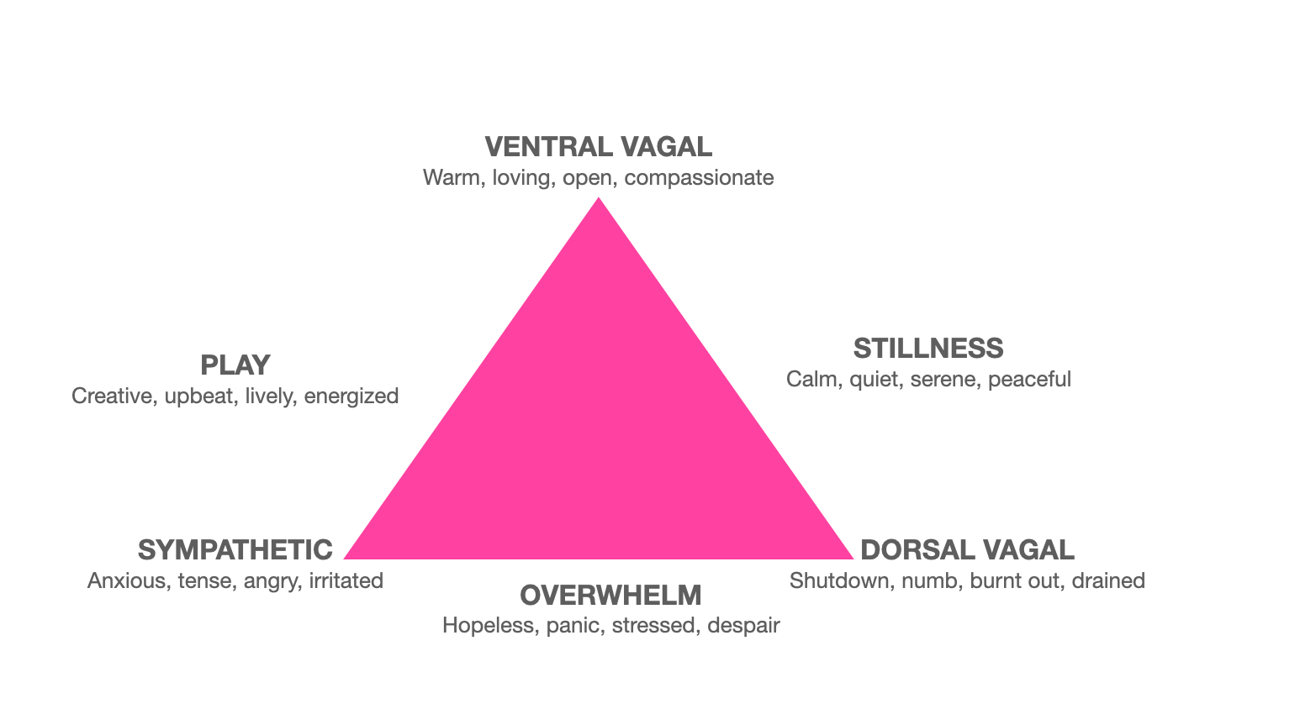
The Ventral Vagal State is a state of rest, digest, relaxation and openness (Social Engagement).
In this state, the body is able to heal, repair and grow. The nervous system is in a state of parasympathetic dominance, meaning that the body is in a state of rest and relaxation. The heart rate is slow and steady and the breath is deep and slow. Blood pressure and blood sugar levels are stable. The digestive system is working optimally and the immune system is strong.
Ventral Vagal & Optimizing recovery
In the Ventral Vagal State, the body is able to heal from injuries, both physical and emotional. The body is able to repair itself from the damage of stress and illness. The body is able to grow new cells and tissue. This is the state of optimum health.
Accessing the Ventral Vagal State
The Ventra lVagal State can be accessed through various means, including meditation, yoga, deep breathing and attuning with people that are safe, loving and compassionate. It is a state that is achieved through relaxation and letting go. It is a state of being present in the moment and being at peace with oneself and the world.
Dorsal Vagal State – Freeze/Shutdown Response
The Dorsal Vagal State is a shutdown response that occurs when we feel overwhelmed, stressed or threatened. It is our body’s way of telling us to “freeze” or “Shut down” in order to protect ourselves.
When we are in the Dorsal Vagal State, our heart rate slows down, our blood pressure drops and our breathing becomes shallow. This is because our body is redirecting blood and oxygen away from our extremities and towards our vital organs. This response is meant to help us conserve energy so that we can survive a stressful situation.
The Effects Chronic Dorsal Vagal
However, the Dorsal Vagal State can also be detrimental to our health. When we are in this state, our immune system is suppressed and we are more susceptible to illness. Overtime, the Dorsal Vagal State can lead to anxiety, depression and other mental health problems.
Building Resilience to the Dorsal Vagal State
Fortunately there are ways to functionally build resilience to the Dorsal Vagal State. Keeping a daily stillness practice engages both the Ventral Vagal and Dorsal Vagal State responses and communicates to the nervous system that this state is safe to experience, reducing the overall intensity. Additionally, play and balance exercises can be used to pull the body out of this response as it adds energy by engaging sympathetic energy.
The Sympathetic State – Fight or Flight Response
The Sympathetic State is often referred to as the fight or flight response. When we feel threatened, our sympathetic nervous system automatically kicks in to help us defend ourselves. This is often referred to as the fight or flight response.
During the fight or flight response, our body releases a burst of adrenaline and other hormones. These hormones increase our heart rate and blood pressure and they also give us a burst of energy. This extra energy is what we need to either fight or confront the threat or run away from it.
Fight or flight is a survival mechanism
The fight or flight response is a survival mechanism that has evolved over time. In the past, it helped our ancestors survive attacks from wild animals. Today, it helps us survive stressful events like car accidents, mugging attempts and other dangerous situations.
While the fight or flight response is a helpful survival mechanism, it can also become problematic. If we are constantly stressed, our body may remain in a state of high alert which can lead to health problems. Therefore, it is important to build resilience to the sympathetic response to ensure that it’s only triggered in response to actual threats.
Building resilience to the sympathetic state
Building this resistance is most effectively done through play, which is a mixed state blending the Ventral Vagal and Sympathetic Nervous System. When we engage in play, we help our body to learn how to regulate the fight or flight response so that its only activated when we are actually in danger.
THE OVERWHELM STATE – Sympathetic + Dorsal Vagal
Overwhelm is characterized by racing mind and feelings of hopelessness and complete lack of control.
Overwhelm: Sympathetic and Dorsal Vagal Responses
The Overwhelm State is a blend of the Sympathetic and Dorsal Vagal responses. It is characterized by a feeling of being overwhelmed, out of control and stressed. The body is in a state of high alert, the mind is racing and feelings of dissociation are common.
Triggers Leading to Overwhelm
This state can be triggered by a variety of things, including a traumatic event, a stressful situation or simply being overstimulated or exhausted. In any event, the anxiety of Sympathetic and the shutdown of the Dorsal Vagal response are simultaneously present which is what makes this state feel so overpowering at times.
This is because 80% of the nerves in the dobby are afferent – running from the body towards the brain. This means that for every thought attempting to calm the body down, 4 times the input is communicating that Overwhelm is the appropriate response. As such, this also implies that Overwhelm is much better resolved through the body (we will talk more about Afferent nerves in time).
Building Resistance to Overwhelm
There are a few practical ways to build resistance to the Overwhelm State. Once you know what your triggers are, you can begin to avoid or manage them. Second, it is helpful to practice relaxation techniques such as deep breathing or meditation or some of the exercises you will learn in this series. These techniques can help to calm the body and mind and reduce the symptoms of Overwhelm. Finally, it is important to build up your resilience by taking care of yourself physically and emotionally. This includes getting enough sleep, eating a healthy diet, maintaining a daily play practice and exercising regularly (we will also learn more about these in upcoming weeks).
By understanding the Overwhelm State and taking steps to build resilience to it, you can begin to build increased resilience to stress and live a more balanced life.
THE STILLNESS STATE – Ventral Vagal + Dorsal Vagal
Stillness is beneficial for overall well being by facilitating optimal mental clarity and physical recovery.
Stillness: Ventral Vagal + Dorsal Vagal
The Stillness state is a blend of the Ventral Vagal and Dorsal Vagal responses. This state is characterized by a sense of calm and ease. The body is in a state of rest and the mind is clear and focused. This state is beneficial for overall well being as it allows the body to heal and repair itself.
Stillness: The safety and balance of ventral vagal
The Ventral Vagal State is characterized by a decrease in heart rate and blood pressure. This state is associated with the Parasympathetic Nervous system and is responsible for the “rest and digest” response. When the body is in a state of rest, it is able to heal and repair itself.
Stillness: Building resilience to Dorsal Vagal
Stillness also builds resilience to the Dorsal Vagal response because it strengthens the connection between the mind and body, ensuring that we only go into a shutdown state in extreme circumstances. The Dorsal Vagal response is characterized by a decrease in heart rate and blood pressure, as well as a shutdown of the digestive and immune systems, so it’s best experienced only in short bursts.
Facilitating Balance, Clarity and Creativity
When we are able to remain in a state of Stillness, we are better able to cope with the stress and manage our emotions. This state of mind-body connection is also associated with increased creativity and productivity. So, if you’re looking to improve your overall well-being, consider incorporating some Stillness into your daily routine.
PLAY STATE = Sympathetic + Ventral Vagal
We all know the feeling: we’re in the zone, time seems to disappear, and we’re completely focused on the task at hand. We’re in the Play state.
The neurobiology of Play
This state is a blend of the Ventral Vagal and Sympathetic responses. The Ventral Vagal response is responsible for the “rest and digest” functions of the body, while the Sympathetic response is responsible for the “fight or flight” response.
In the Play state, these two responses are in balance. We’re alert and focused, but we’re also relaxed and in control. This state is beneficial for overall well-being because it allows us to tap into our creativity, problem-solve more effectively and build strong social bonds. It also builds resilience to the Sympathetic stress response, ensuring that we only experience activation in response to actual threats.
Play is a stress antidote
The next time you’re feeling stressed, take a break and find a way to play for a few minutes. It’s one of the best ways to quickly re-balance the nervous system.
In this 5 session series, you will be given a group of exercises to do that will focus on shifting your nervous system state. It is great to practice these when you don’t need them, so that when you do, you can use the tools you’ve practiced.
|