

Ridden Work
You are viewing a preview of this learning path. Become a member to access the full learning path and track your progress!
int(0)
NULL
Learning Path Preview
Overview of First Ride Progression
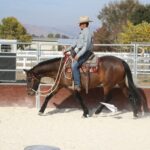
First Rides – Progression of Steps
The following is the progression that we will work on for the First Rides. First rides doesn’t just mean a horse’s first rides. It is…
Lateral Flexion Before Mounting & First Rides
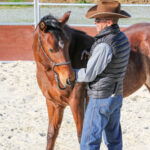
Lateral Flexion Before Mounting & First Rides
Before you put your foot in the stirrup or swing fully into the saddle, it’s critical to confirm that your horse can respond softly to…
Rein Management
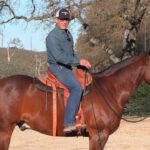
Rein Management
Before you start riding, proper rein handling is critical. This video explains how correct rein use affects lateral flexion, steering, and bending to a stop,…
The Actual First Ride
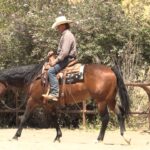
The First Ride
There are a million ways that the first ride can go. For horses that have gone through all the attunement and connection → the 4…
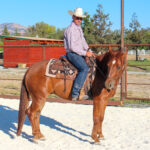
Lateral Flexion 2
Lateral Flexion is one of the most important communication tools between you and your horse. It’s not just about getting the head to bend —…
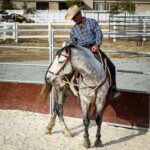
Disengaging Under Saddle
In this step, you will begin to move your horse’s feet by asking them to untrack the hind feet. Start with just one step of…
Disengage to Forward (Releasing the Bend)
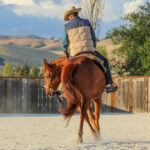
Disengage to Forward (Releasing the Bend)
Goal: Take the soft, multi-step disengage you’ve built and let it melt into forward motion. You’ll gradually release some bend while the feet keep moving,…
Getting Them To Go Forward
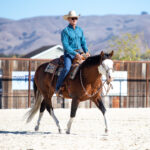
Getting Forward
If your horse isn’t giving you enough forward, this is the process that I have been using to teach the horses to have more forward.…
Bend to Stop
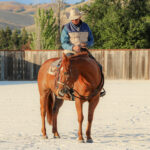
Bend to Stop
Goal: Teach the horse to stop softly and safely from forward motion—especially at the canter—by putting a bend in their body, allowing excess energy to…
Trot on a Loose Rein & Bend To Stop
Loose Rein Forward & Bend To A Stop – Trot
Goal: Develop a forward, relaxed horse that can trot on a loose rein with no steering. This helps the horse learn responsibility for maintaining gait…
Canter on a Loose Rein & Bend To Stop
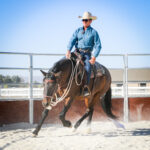
Canter on a Loose Rein
Goal: Introduce your horse to cantering under saddle with no steering, maintaining relaxation and forward flow. At this stage, leads don’t matter — just reaching…
First Rides in a Big Arena: Groundwork Everywhere
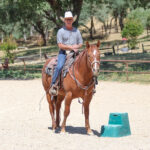
First Rides in a Big Arena: Revisiting Basics
Up until now, you may have been doing most of the work in the safety of a round pen or small arena. As you prepare…
Destination Addiction at the Walk
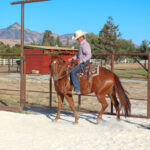
Destination Addiction
I discovered the term destination addiction many years ago on a meme on social media. It read “Beware of Destination Addiction. Destination addiction is the…
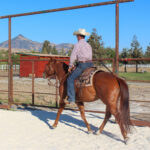
Destination Addiction at the Walk
I have found that the more connected a horse is (and connection means feeling safe in your presence, it’s not about proximity), the less destination…
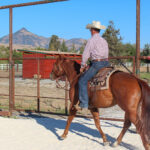
Destination Addiction at the Trot & Canter
These steps are not just about DA, but it is an integral part of the whole riding process. It’s about the horse being able to…
More First Rides
More First Rides
Here are more videos of the horses you’ve seen in this Learning Path as they progress. Each one has their own personal Playlist so you…
Ridden work starts long before your foot goes in the stirrup. It starts in the way you show up for your horse—grounded, present, and clear—so the saddle and the ride feel like a natural continuation of connection, not a switch into “now I’m in charge” mode.
We’ll start the very basics of riding: how to organize your body, how to use your reins and legs without bracing, and how to ride with a calm, consistent feel that invites the horse to carry themselves. The goal isn’t to micromanage—it’s to develop a horse who can be responsible for their own balance and emotions, so you can gradually soften your aids until they’re almost invisible.
Ultimately, we’re working toward the kind of ride that feels simple and confident: loose rein at the walk, trot, and canter, with your horse in control of themselves—steady, attentive, and comfortable in their own skin. Not “held together,” but truly connected, self-controlled, and free.
Membership Required
You must be a member to access this content.
Become a member today! Membership benefits include:
- Access To Over 800+ Videos
- Training Courses and Learning Paths
- Access to member-only Events
- Direct Q&A with Warrick
- Access to Exclusive Community Forums
- Mobile App + Video Downloads
